
















































































.jpg)






















































































.jpg)


Lorem ipsum dolor sit amet consectetur adipisicing elit. Minima quam aperiam ullam.
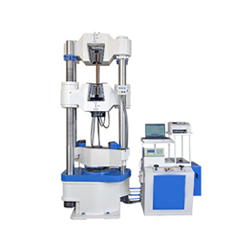
The Computer Controlled Hydraulic Universal Testing Machine (often referred to as a Universal Tensile and Compression Testing Machine) is a versatile piece of equipment used to test the mechanical properties of materials under tensile, compression, and bending loads. It is commonly used in industries such as materials research, quality control, manufacturing, and engineering testing labs.
Key Features and Description:
1. Purpose:
- Tensile Testing: Measures the material's response to a stretching force. This test helps determine tensile strength, elongation, and other mechanical properties like Young’s Modulus.
- Compression Testing: Measures the material's response to a compressive force, which helps determine the material's behavior under compression, such as buckling resistance, compressive strength, and stiffness.
- Bending Testing: Can also be performed on this machine to evaluate the bending strength and modulus of elasticity in bending.
2. Main Components:
- Hydraulic System: The machine uses a hydraulic system for load application, offering high precision and load range. The hydraulic power provides the necessary force to stretch or compress the specimen.
- Load Cell: Used for accurate force measurement during the test. The load cell sends real-time data to the computer for analysis.
- Crosshead: The adjustable part that holds the specimen and moves under controlled conditions to apply the tensile or compressive force.
- Computer Control System: This system allows for the machine to be fully automated. It provides real-time data analysis, results storage, and reporting. The computer controls the machine's operation, including speed, load, and displacement.
- Frame: A sturdy frame that supports the test sample and holds all machine components in place.
3. Applications:
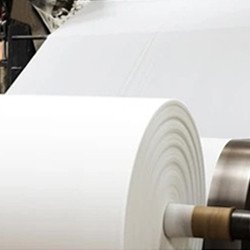
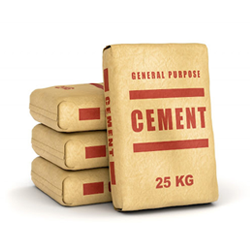
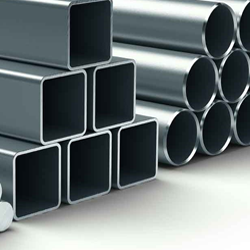
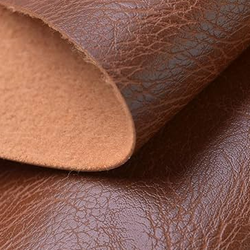
- Materials Testing: Widely used to test metals, polymers, composites, and other materials. Commonly tested materials include steel, aluminum, rubber, plastics, textiles, and concrete.
- Quality Control: Used in manufacturing environments to ensure products meet the required mechanical properties and performance standards.
- Research and Development: In research labs, it helps to test new materials and products during development.
- Educational Use: In academic institutions for teaching the principles of material science and mechanical testing.
4. Testing Capabilities:
- Tensile Strength: The maximum stress a material can withstand while being stretched or pulled before breaking.
- Yield Strength: The stress at which a material begins to deform plastically.
- Elongation: Measures the amount of strain (stretch) a material undergoes before breaking.
- Compressive Strength: Measures the ability of a material to resist deformation under compressive loads.
- Modulus of Elasticity: Represents the material’s stiffness, calculated by the ratio of stress to strain in the elastic region.
- Strain Measurement: Tracks the deformation of the material during testing.
- Load vs. Displacement Curve: Provides a graphical representation of the material’s response to applied forces.
5. Advantages:
- High Precision: The hydraulic system allows for accurate load application, making it ideal for precise material testing.
- Wide Range of Testing: Capable of testing materials under both tensile and compressive loads, and sometimes even bending tests.
- Automation: Computer control allows for automated testing, reducing the need for manual intervention and improving accuracy.
- Data Analysis and Reporting: The computer control system allows for detailed real-time analysis, and data can be stored and exported for further reporting.
- Versatility: Suitable for various material types, from metals to polymers, and for different testing environments, from R&D labs to production lines.
6. Specifications:
| Feature | Description |
|---|---|
| Load Capacity | Typically ranges from 10 kN to 2000 kN (depending on the model) |
| Test Speed | 0.001 - 500 mm/min (depending on the material and test conditions) |
| Force Measurement | Load cells with high precision (accuracy of ±1%) |
| Testing Mode | Tensile, Compression, Bending, Shear (depending on the machine setup) |
| Control Type | Computerized control with touchscreen interface |
| Frame Construction | Steel, sturdy frame for high-load capacity |
| Safety Features | Overload protection, safety shields, and emergency stop |
| Data Recording | Automatic recording and graphing of force vs. displacement data |
| Power Supply | Typically 380V, 50Hz, 3-phase for heavy-duty machines |
| Applications | Material R&D, Quality Control, Industrial Testing, Educational |
7. Customization Options:
- Load Capacity: Can be tailored to suit specific needs, from small scale to industrial-grade applications.
- Frame Size: Custom sizes for larger or smaller testing materials.
- Control System: The machine can be equipped with different types of software, depending on the complexity of testing and reporting required.
- Safety Features: Additional safety features, such as overload protection, limit switches, and emergency stop, can be integrated.
8. Contact for Pricing:
For pricing and further specifications, please contact us at: Phone: +8801792223444


